CUEELF Heavy Hitter Break Jump Cue Line
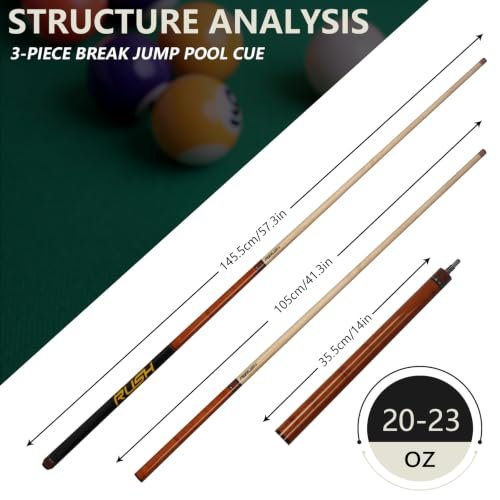
Two dedicated cues worth of function in one bag slot — the CUEELF Heavy Hitter line pairs a 13.5mm Bakelite tip and Hard Maple shaft with a 3-piece quick-release design that converts from a full 58-inch breaker to a compact jump configuration without making your opponent wait. Built for league players who need both shots handled without checking a second cue.

Both Heavy Hitter Models at a Glance
Heavy Hitter Black 3-Piece Break Cue
See on Amazon
Heavy Hitter Zebrawood 3-Piece Break Cue
See on AmazonSee more products
Discover the full product lineup with current selection on Amazon.
All products on AmazonHeavy Hitter Model Specs Compared
Both models share the same tip, shaft material, joint design, and weight options — here's how the package details compare side by side.
| Model | Finish / Butt | Tip Size | Package Dimensions | Package Weight | Weight Options | Included | Best For |
|---|---|---|---|---|---|---|---|
| Heavy Hitter (Sugar Honey) | Sugar Honey maple finish | 13.5mm Bakelite | 31.8 × 2.8 × 1.8 in | 0.84 kg | 20, 21, 22, 23 oz | One spare tip + soft bag | Players who want a clean traditional maple look with a spare tip on hand |
| Heavy Hitter Zebrawood | Zebrawood butt, high-contrast grain | 13.5mm Bakelite | 32 × 3 × 2.5 in | 0.89 kg | 20, 21, 22, 23 oz | Break/jump cue | Players who want a visually distinct butt and slightly heavier packaged build |
If performance is the only filter, either model will get you to the same place at the table — choose by butt finish preference, and if a spare tip in the box matters to you, the Sugar Honey model includes one.
How to Pick the Right Heavy Hitter for Your Game
Both Heavy Hitters share the same functional core — 13.5mm Bakelite tip, Hard Maple shaft, 3-piece quick-release joint system, and a 20–23oz weight range. The decision between them comes down to two things: aesthetics and how you weight butt feel in your stroke.
The original Heavy Hitter (Sugar Honey finish) has a clean, traditional maple look with warm tones. The Zebrawood model (P-ZW) uses a zebrawood butt for a visually distinct, high-contrast grain pattern that a lot of players find easier to track through the stroke. The Zebrawood also ships in slightly more generous packaging — a marginal difference, but worth noting if you're gift-wrapping or storing long-term.
On weight selection, here's the honest guide:
- 20 oz — suits players with a naturally fast, aggressive stroke who generate plenty of rack-scatter speed on their own. A lighter stick rewards a quick, committed break motion.
- 21 or 22 oz — the range where most intermediate league players land. Enough mass to let the cue do some of the work without slowing down your stroke mechanics.
- 23 oz — for players who prefer to drive through the rack with deliberate, slower-tempo power rather than speed. If your natural break is a controlled push rather than a snap, this is worth trying.
Don't overthink the weight. If you're not sure, 21 oz is where the majority of players with a mid-range break speed find the best result.
What a Bakelite Tip Actually Does at the Break
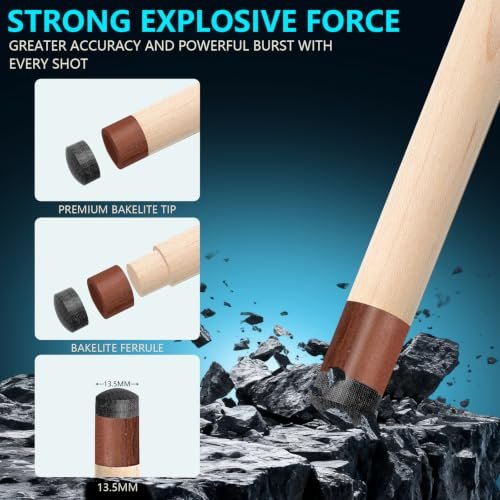
The 13.5mm Bakelite tip is the single biggest performance difference between a Heavy Hitter and a playing cue — and it's worth understanding why before your first break attempt. Bakelite is a hard synthetic resin. Unlike leather, it absorbs almost no energy on contact, which means the full force of your stroke transfers directly into the cue ball rather than being partially absorbed by the tip material. The practical result is more rack scatter from the same stroke, which is exactly what you want on a break cue.
There's one important setup note that the Reddit first-impressions thread makes clear: a Bakelite tip requires heavy chalk coverage before breaking. The tip is less porous than leather, so it holds chalk differently — if you apply chalk the same way you do on your playing cue, you'll miscue. Apply chalk thoroughly and consistently before every break, especially while the tip is new. Once that habit is built, the energy transfer advantage is real and repeatable. Multiple players in that thread specifically called out the Heavy Hitter's rack spread as some of the best they'd gotten at the price point.
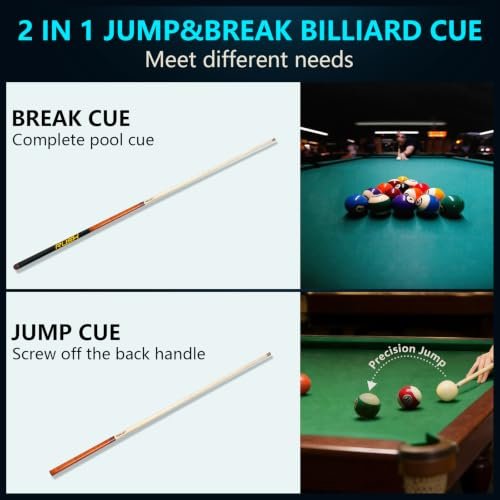
On the jump side: the 3-piece design converts to a shorter jump configuration by removing the butt section at the quick-release joint. Jump shots benefit from a harder tip for the same reason breaks do — firm contact without energy loss. The Heavy Hitter won't replace a dedicated jump cue for a player who jumps constantly in competitive play, but it handles the shot competently enough that most league players won't need a third stick in their bag.
Storage, Warpage Prevention, and Tip Care
Hard Maple is an excellent shaft material — dense, consistent, and responsive — but no wood cue is immune to humidity and improper storage. The Heavy Hitter ships with a soft bag included (the Sugar Honey model explicitly includes one tip and one soft bag). That bag is a starting point, not a long-term storage solution. For any cue you're using regularly, a hard case that holds it vertical is the right call. Never leave a maple cue in a car overnight, in a hot trunk, or leaned against a wall at an angle — those are the three fastest ways to introduce a warp.
The 3-piece design actually helps here: when you break the cue down into its sections for storage, each piece is shorter and easier to protect. The quick-release joints also mean less torque stress on the cue during assembly and breakdown versus a standard threaded joint.
On tip maintenance: the Bakelite tip on a break/jump cue needs less routine attention than a leather playing tip, but it still needs chalk applied correctly before every use (see above). If the tip surface starts to feel slick or you're getting inconsistent contact, a light scuff with a tip tool's abrasive face will restore grip. You don't need to shape a Bakelite tip the way you shape leather — the radius stays stable longer — but aerating and scuffing the surface periodically will extend consistent chalk retention. CUEELF's 5-in-1 tip repair cube handles both tasks if you already have it in your bag.
Frequently Asked Questions
Can the Heavy Hitter really replace two separate cues — a dedicated breaker and a dedicated jump cue?
Honestly: a standalone break cue will break slightly better, and a dedicated jump cue will jump slightly better. The Heavy Hitter doesn't claim otherwise. What it gives you is one bag slot, one cue to maintain, and a quick-release joint that converts between configurations in a few turns while your opponent is still watching. For the league player who needs both functions without carrying two specialty cues, that trade-off is the right call. For a player who breaks every rack in competitive nine-ball and jumps regularly in match play, two dedicated sticks is the better answer — and that's worth knowing before you buy.
Why did I miscue on my first break attempt?
This is the most common first-session issue with the Heavy Hitter, and it's documented directly in r/billiards first-impression reports — it's a chalk application problem, not a cue defect. A Bakelite tip is less porous than leather, so it holds chalk differently. If you apply chalk the same way you do on your playing cue — a light touch or two swipes — you won't have enough coverage for a full-power break. Apply chalk heavily and consistently before every break attempt, especially while the tip is new. Once that habit is in place, the miscue problem goes away and the tip's energy transfer advantage is the thing you notice instead.
Is 13.5mm a standard break tip size, and does it affect how the cue plays?
13.5mm is on the larger end for a break tip — most playing cues run 12mm to 13mm. The larger diameter gives you a slightly bigger contact surface on the cue ball, which helps with accuracy when you're going for a center-ball hit on the break. Combined with the Bakelite material (hard, low-absorption), the 13.5mm tip is tuned specifically for maximum energy transfer into the cue ball rather than the feel and control you'd want from a playing tip. Don't use the Heavy Hitter for position play — that's not what the tip is designed for.
What weight should I order if I'm not sure?
Start at 21 oz. That's where most intermediate league players with a mid-range break speed find the best result — enough mass to let the cue do some of the work without fighting your stroke. If you have a naturally fast, snapping break stroke, try 20 oz. If your break is deliberate and slower-tempo, 22 or 23 oz gives you more momentum without needing to add speed. Weight is personal, but 21 oz is the honest safe default for a player who doesn't already know the answer.
How does the quick-release joint actually work, and how fast is the conversion?
The Heavy Hitter's 3-piece design uses double quick-release joints — the butt section disconnects from the shaft in a few turns rather than requiring a full unscrew. In practice, conversion from a full 58-inch break configuration to a shorter jump configuration takes seconds. You're not fumbling with threads while your opponent watches — it's a deliberate half-turn motion and the section comes free. The joint system also means less torque stress on the cue during repeated breakdown and assembly compared to a standard threaded joint.
Does the Hard Maple shaft make warping a real risk I should worry about?
Warping is a real risk with any wood cue, including expensive ones — and it's honest to say that up front. CUEELF uses a wood-curing process intended to minimize it, but no maple cue is immune to humidity extremes or improper storage. The three rules that matter most: never leave it in a car, store it vertically (the included soft bag is a start, but a hard case is better for long-term storage), and don't lean it against a wall between sessions. The warranty covers manufacturing defects — it doesn't cover environmental warping, so prevention is on the player. The 3-piece design helps: broken down into sections, each piece is shorter and easier to store flat and protected.